















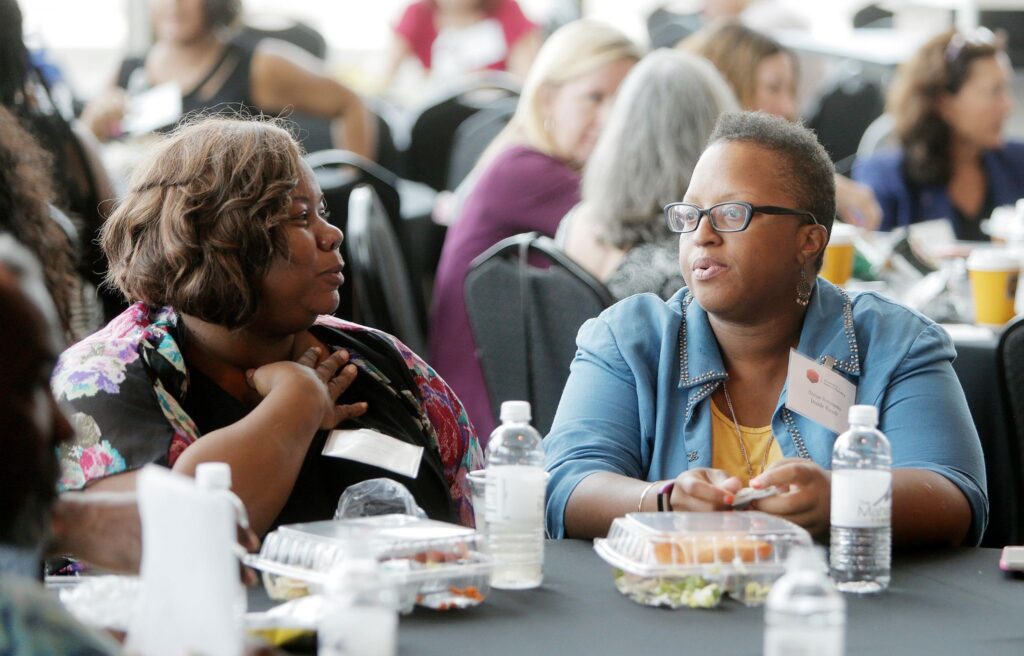
The 20th African American Health Forum is Saturday at the Foundation for a Healthy St. Petersburg’s Center for Health Equity. Photo: St. Petersburg Innovation District.
Black women are three times more likely to die from pregnancy-related causes than their white counterparts, one of many stunning statistics that highlight persistent health disparities.
Dr. Kenneth Bryant, founder of the Minority Health Coalition of Pinellas (MHCP), organized the African American Health Forum to help mitigate those discrepancies. His organization, in partnership with the Foundation for a Healthy St. Petersburg, will commemorate the event’s 20th anniversary on Saturday.
The foundation’s Center for Health Equity will host the forum from 10 a.m. until 2 p.m. at 2333 34th St. S. in St. Petersburg. Attendees will receive complimentary health screenings, hear from national experts, and establish connections with local healthcare providers.
“We believe the solution is community education,” Bryant said. “The MHCP’s focus is to educate the community on these health disparities. These health disparities exist, and early detection is one way to eliminate these disparities.”
Bryant, a urologist, moved to St. Petersburg about 40 years ago. He noticed that African Americans were nearly twice as likely to develop prostate cancer and die from the disease compared to “any other group in the world.”
Intent on addressing the issue, Bryant launched the Prostate Cancer Awareness and Support Group. The nonprofit partnered with Bayfront Health Foundation, the American Cancer Society, and the St. Petersburg Chapter of the National Black Nurses Association to organize the first iteration of the African American Health Forum (AAHF) in 1998.
Bryant’s nonprofit evolved into the MHCP “because we found out that there are health disparities in almost every disease that you can think of.” African Americans are disproportionately more likely to suffer from diabetes, heart disease, hypertension, strokes, kidney disease, and “almost all cancers,” he said.
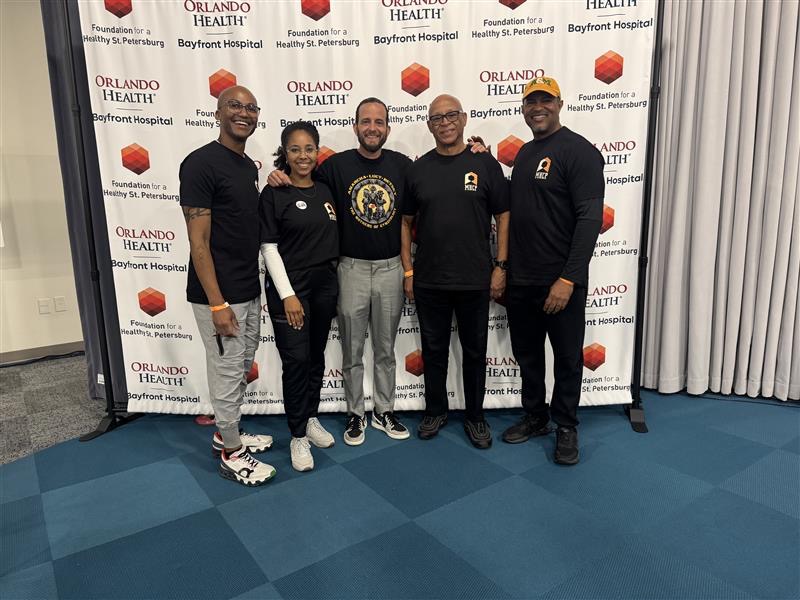
Dr. Kenneth Bryant (second from right), founder of the Minority Health Coalition of Pinellas, at a previous African American Health Forum. The event’s roots trace back to 1998. Photo: Foundation for a Healthy St. Petersburg.
The MHCP also focuses on social determinants of health. These include where people are born, live, work, play, and their quality of life, which encompasses factors such as housing, education, income, and community safety.
Bryant noted that economic, environmental, and physical health intertwine. “In St. Petersburg, if African Americans live in a place with a high industrial footprint, research has shown that will also cause an increase in health disparities,” he said.
The Foundation for a Healthy St. Petersburg has conducted that research. A study released in December 2024 found a 16-year life expectancy gap between residents of Campbell Park, a predominantly Black neighborhood, and those who live in the more affluent Snell Isle area.
According to the AAHF announcement, community health rankings have climbed in recent years. However, persistent disparities remain, which underscores the need for continued outreach.
The free event will offer educational panel discussions on chronic disease, maternal and fetal health, mental wellness, and other topics. Renowned researcher and thought leader Dr. B. Lee Green, a senior member of the Department of Health Outcomes and Behavior at Moffitt Cancer, is the keynote speaker.
Attendees can receive blood pressure, glucose, glaucoma, skin cancer, cholesterol, and vision screenings. They can also connect with health care providers of color.
Bryant noted that a lack of trust also exacerbates health disparities. He said African Americans often feel like they’re not being treated properly by white physicians, who may not have the social or cultural competence needed to adequately treat minorities.
Dr. Kanika Tomalin, CEO of the foundation, said that genetics, access to care, and provider quality are responsible for about 20% of health outcomes, with social determinants accounting for the remaining 80%. However, the $5.3 trillion annually spent on healthcare in the U.S. does not align with those statistics.
“We mostly invest in that 20%, and we leave the 80% to chance or to systems that have been proven not to work for the entire population – for which it was designed,” Tomalin explained. “So, when we have forums like this, it brings together the medical community with the community for which it cares … to build real bridges that I think pave a path.”
That path leads to a better understanding of health conditions, and empowers people to orchestrate rather than merely participate in their medical strategy, Tomalin added. The overarching goal is to help “create the systemic change that’s required to actually see disparities decrease.”
For more information on the 20th African American Health Forum, visit the website here.
Share Your News With Us
To share news with the Power Broker, email us at reachout@powerbrokermagazine.com. To sign up for our twice-weekly