
















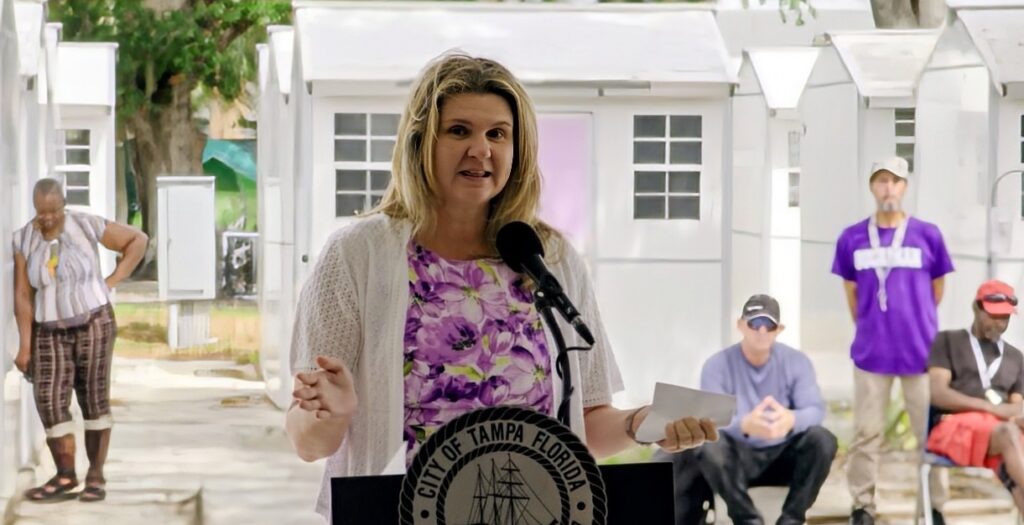
Maggie Rogers, executive director of Catholic Charities, said Tampa Hope has served nearly 2,000 people in just over four years and will continue expanding. All images: City of Tampa.
The Tampa Hope campus began in 2020 with an ambitious vision to temporarily shelter 100 people experiencing homelessness during the COVID-19 pandemic. The rapidly evolving facility can now house over 350 people.
Mayor Jane Castor and city of Tampa officials joined Maggie Rogers, executive director of Catholic Charities, on April 8 to celebrate the unveiling of 100 new-and-improved Hope Cottages. The tiny homes offer more space than the previous models, high-efficiency heating and cooling, and, perhaps most importantly, privacy for residents.
The facility at 3704 E. 3rd Ave., in an industrial area of Tampa, now has 215 total cottages, thanks to a $1.2 million grant from the city. Castor noted that Tampa Hope, which also provides holistic wrap-around services to help residents transition into permanent housing, is now a “well-oiled operation that continues to grow.”
“Tampa Hope treats the whole person,” Castor said. “Everything that is provided here is helpful to the individuals and helps them go from a state of homelessness to becoming productive members of our community.”
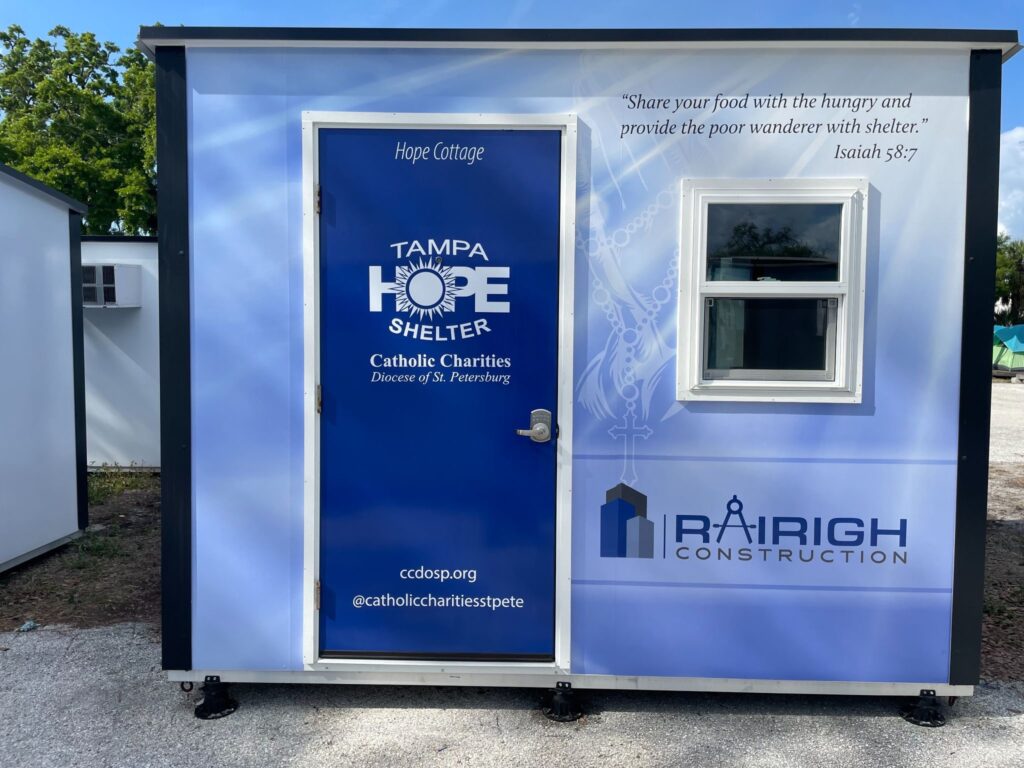
The new Hope Cottages can withstand a Category 5 hurricane.
The new, 70-square-foot cottages feature beds, smoke detectors, fire extinguishers, power outlets, shelving, windows, and storage space. Each home can also withstand Category 5 hurricane-force winds.
Catholic Charities, which operates the shelter, incorporated feedback from clients to ensure the cottages meet their needs. Each tiny home costs approximately $25,000.
Tampa Hope provides three meals daily, toiletries, clothing, restrooms, showers, and laundry facilities. Outreach specialists locate homeless individuals and bring them to the shelter.
Case managers and housing specialists ensure that clients have access to basic health and dental care, mental health and substance abuse counseling, employment skills, financial literacy education, and other resources to help them secure permanent housing. “That’s what we’re looking for – and really, that is what Tampa Hope is all about,” Castor said.
Castor noted that the city used Pinellas Hope, also operated by Catholic Charities, as a model for the Tampa shelter. “We looked around the nation, and it brought us right back home,” she said.
The current, permanent facility opened in December 2021. Rogers, whom Castor called “one of the city’s real-life superheroes,” said she and her team established the shelter in roughly a month.
Tampa Hope has now served nearly 2,000 people. Rogers said approximately 40% have obtained permanent housing, far surpassing the national average of 25% for emergency shelters.
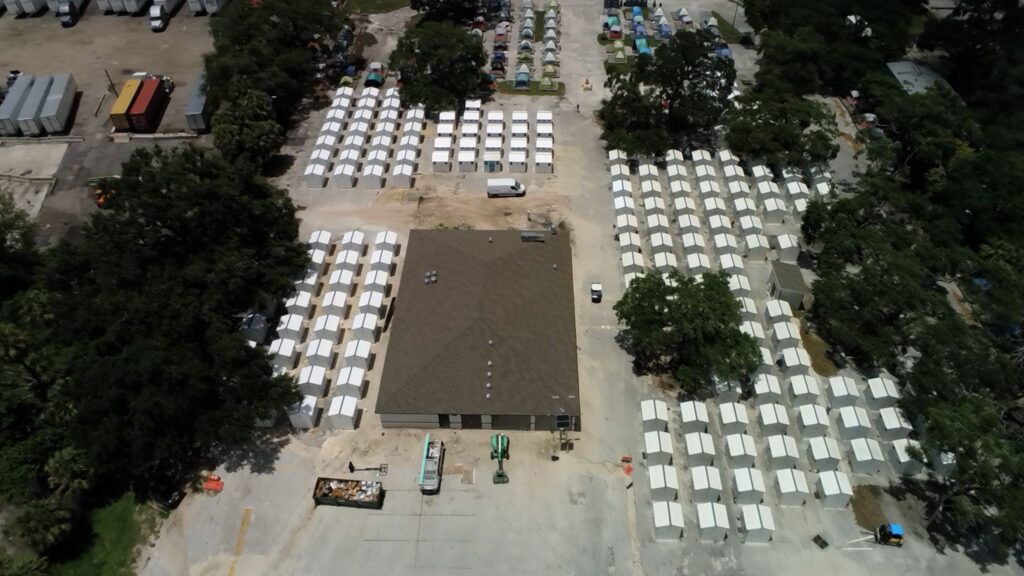
Tampa Hope now has 215 total cottages and 116 single-occupancy tents.
The facility’s 215 cottages represent the “largest pallet village in the country, which is pretty cool,” Rogers said. “And we’re not going to stop there; I plan to add at least another 60. Right now we have about 350 beds on campus, and I will take us to over 400, as promised.”
Rogers also announced that Tampa Hope plans to add a medical clinic, a welcome center, and new partner and staff offices. She thanked city officials for their support and “believing in us.”
City Councilmember Lynn Hurtak said she understood the vision for Tampa Hope, but the reality is “more than I really could have ever imagined.” She believes the campus is proof that officials are “focusing on all aspects of housing affordability.”
The city has provided Tampa Hope with $7.4 million in funding since 2021. Officials budgeted $1 million annually for the shelter, and Hurtak said councilmembers have reallocated an additional $500,000 for the facility this year.
“We are always looking for creative ways to capitalize on these types of assets and support our program,” Hurtak said. “Tampa Hope has been a huge success story and a model for others nationwide.”
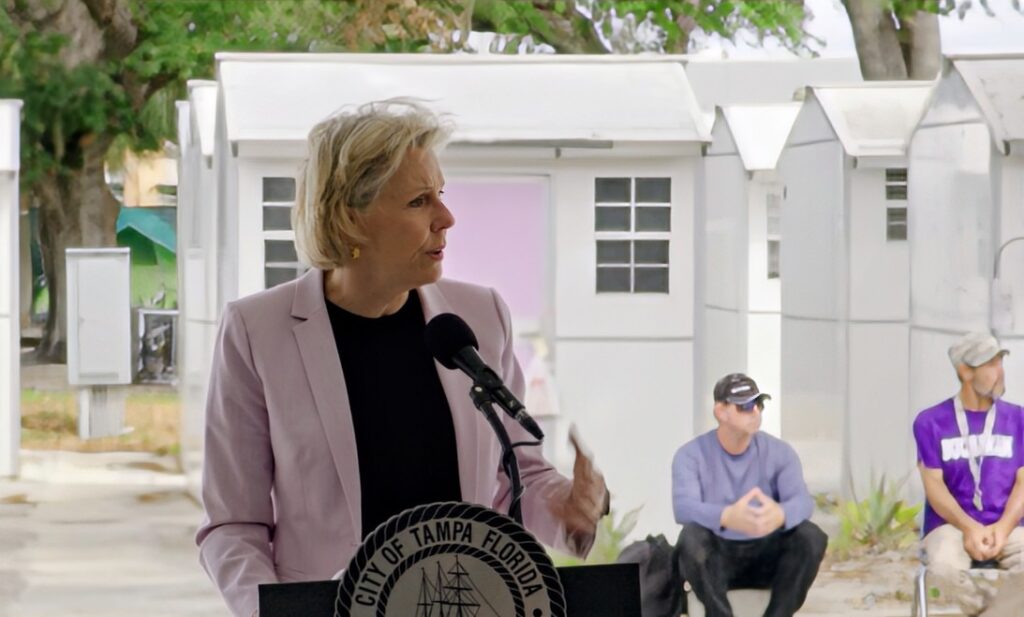
Tampa Mayor Jane Castor called Maggie Rogers, executive director of Catholic Charities, “one of the city’s real-life superheroes.”