
















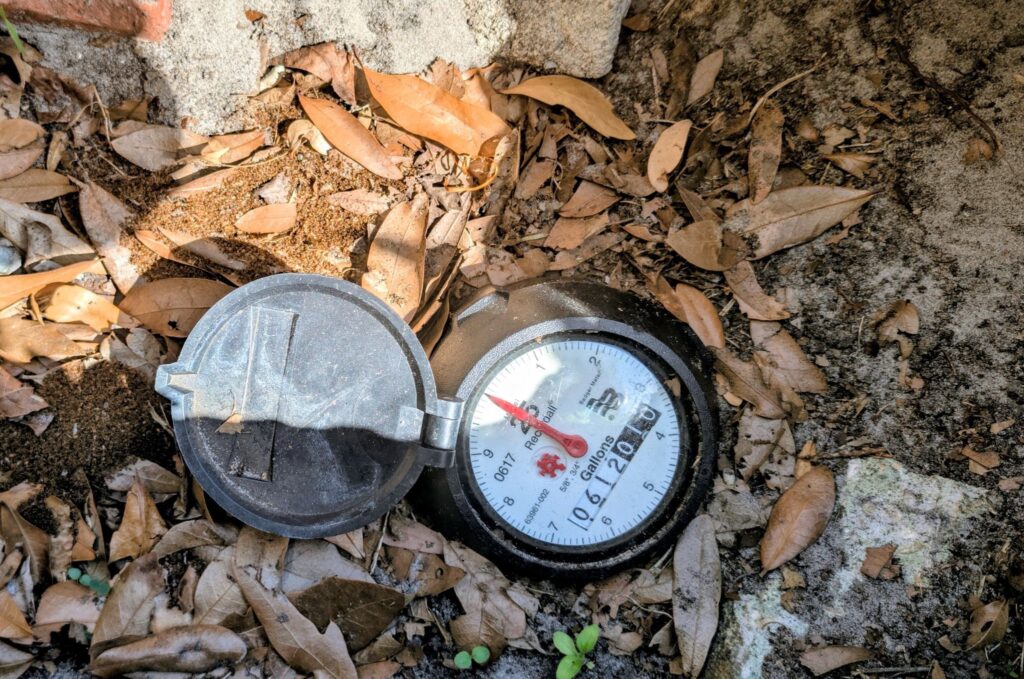
St. Petersburg is now accepting proposals for a company to replace aging analog water meters with more accurate digital versions that are compatible with advanced reporting software. Photos by Mark Parker.
A company’s unsolicited proposal to help St. Petersburg replace its outdated water metering infrastructure with a technologically advanced system has intrigued city officials, despite its $77 million cost.
Ameresco began its pitch by noting that St. Petersburg faces an “urgent water infrastructure and billing crisis that is eroding public trust and straining household budgets.” The problem hit a crescendo in early 2025 when thousands of households throughout the city began reporting exorbitant water bills – many topped $1,000 monthly – following Hurricanes Helene and Milton.
Mayor Ken Welch’s administration blamed storm-related leaks; however, issues have persisted. Ameresco’s proposal, received in January, states that public reporting, city council hearings, and litigation have highlighted systemic issues, including faulty meters, processing errors, and limited customer support.
The city is slowly installing new digital meters. Now, city officials are turning to the private sector for help implementing advanced software that automates readings and more accurately tracks water usage, which would ultimately save money. Officials discussed the proposal and the need for creative solutions to speed up the process on April 2.
“Mayor Welch has directed staff to try and expedite the transition to digital meters in a timely and cost-effective manner, and I think, we believe, that’s kind of the consensus on city council as well,” said City Administrator Rob Gerdes. “That’s what we want to achieve as a city.”
Exploring Solutions
Gerdes added that the city must now decide how it wants to achieve that goal. He noted there are funding challenges for a project that would affect every residential, commercial, and public property in St. Petersburg.
Council members agreed with moving the process forward by accepting competing proposals and comparing costs, as dictated by Florida’s public-private partnership statute. Administrators opened a month-long submission window on Wednesday.
The selected company will implement approximately 70,000 digital water meters, an advanced communications network and software platform, and data integration services, and is also responsible for customer engagement and project management. Proposals, due by 3 p.m. on May 19, can include options for private or public financing and ownership.
“The issue of what is the most fiscally prudent way to do this is extremely important,” Council Chair Lissette Hanewicz said at the April 2 meeting. “Because at the end of the day, that cost gets passed down to our customers.”
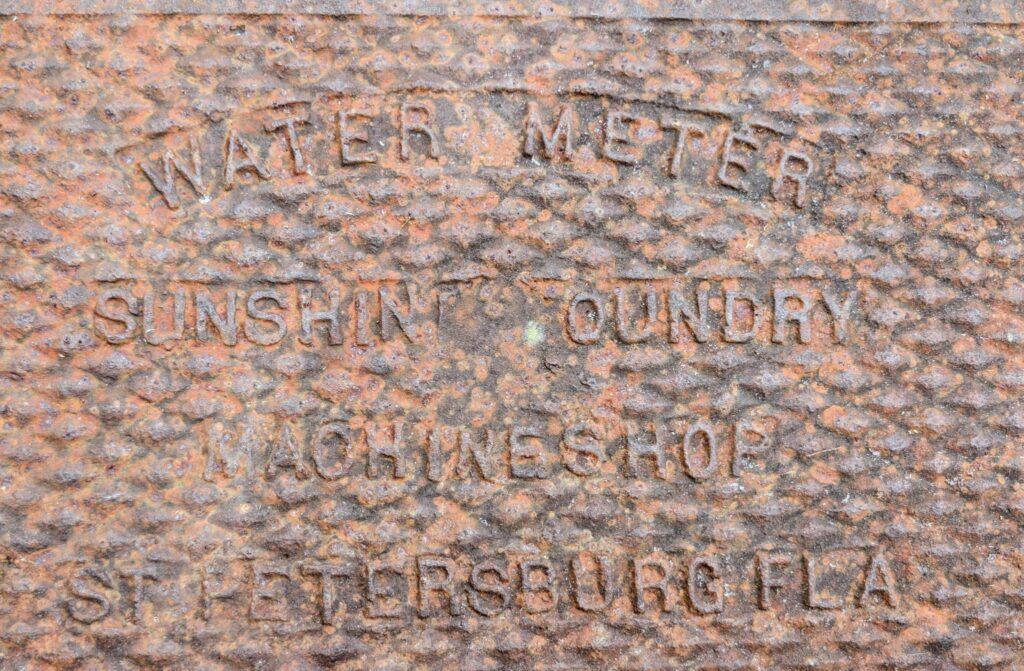
The city is slowly installing new digital meters.
St. Petersburg’s current system utilizes analog meters installed in the 1970s. Advanced digital metering infrastructure (AMI) software would provide customers with continuous water usage updates and overconsumption alerts.
Public Works Administrator Claude Tankersley called it a “big benefit” for residents. “We can catch potential water leaks quickly and not allow them to continue … leaking that water for a full month,” he said.
Tankersley said AMI would also save the city and taxpayers money by reducing the amount of unbillable water. St. Petersburg is already installing new digital meters, without the underlying reporting software, but staffing and funding constraints have slowed the process.
Public works crews have replaced roughly 25,000 of the city’s 97,000 meters. Tankersley said it would take “another five years” to complete the transition.
An outside company could install thousands of new meters monthly rather than annually, Tankersley added. “My staff and I would like to move forward with hiring somebody to come in and take it over,” he said.
Tanksersley said the city could pay for the project through a property tax-funded bond issuance that voters must approve in November. Councilmember Richie Floyd, like multiple colleagues, said he atypically supported that idea due to the problem’s magnitude.
“We’ve got a great solution right in front of us,” said Councilmember Gina Driscoll. “I really need assurance one way or another that this is going to happen very, very soon.”
Gerdes and Tankersley pledged that it would, potentially with Ameresco leading the way. The company wants to develop, finance, install, and own the new system.
The city would reimburse the company every time it successfully reads a meter. Councilmember Copley Gerdes expressed concern over the price tag.
He said Amersco’s proposal would ultimately cost the city $77 million, not including inflation adjustments.“I want to see if there are other ideas out there to get this done,” Gerdes continued. “If we can self-perform it for $25 million – that’s a massive gap.”
Councilmember Corey Givens Jr. agreed that officials should be “good fiscal stewards of taxpayer funds.” He also believes that the city “cannot continue kicking the can down the road,” and constituents expect services that “provide them with relief, that make their lives easier.”
Share Your News with Us
To share news with the Power Broker, connect with reachout@powerbrokermagazine.com. To sign up for our twice-weekly e-newsletter, visit www.powerbrokermagazine.com; and to join our online conversation, subscribe to our YouTube channel at Power Broker Media Group – YouTube.