
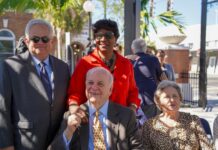












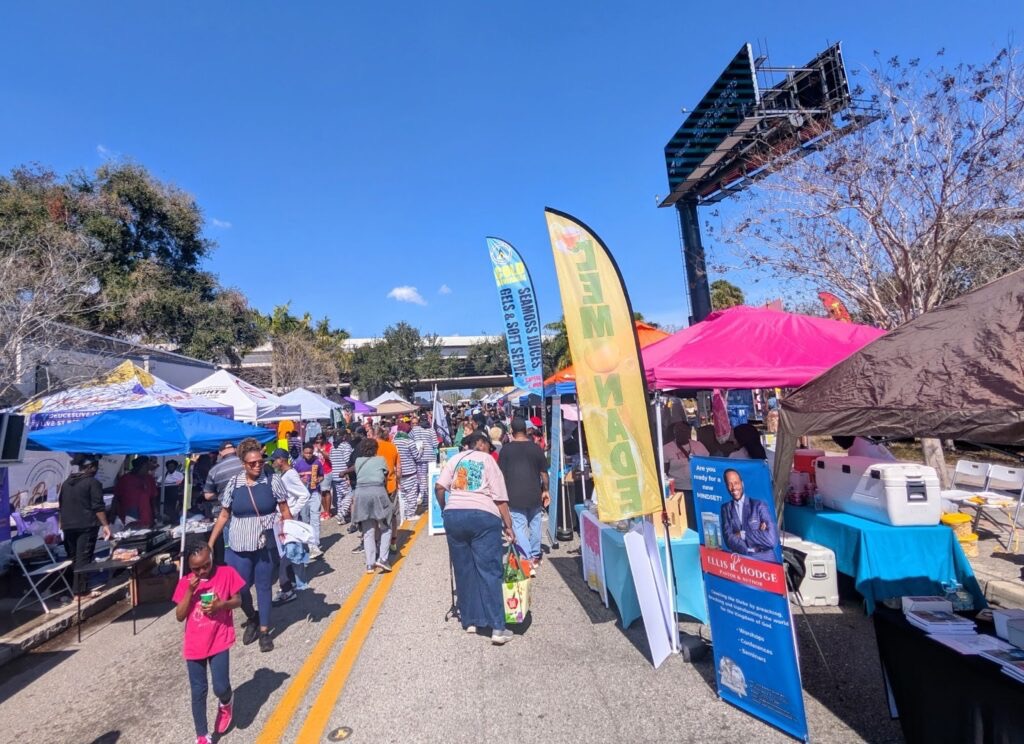
The Deuces Live District has a state-designated Main Street, one of four in St. Petersburg. Photos by Mark Parker.
St. Petersburg is home to four state-designated Main Streets that foster economic development and historic preservation in traditional business districts. A lack of funding is hindering growth and expansion.
On April 16, city officials explored avenues to increase support for the local program, which operates under a national model. However, they are also facing a budget crunch and ongoing uncertainty surrounding property tax revenues.
Councilmember Corey Givens Jr. requested the discussion after hearing that a lack of funding could jeopardize popular Main Street events, including the Tampa Bay Collard Green Festival and Halloween on Central. City Administrator Rob Gerdes noted that the council sets appropriations, and Mayor Ken Welch decides whether to execute a contract.
“In this case, if you did decide to do some type of additional funding, we would go forward with the appropriation,” Gerdes said. “The mayor doesn’t have any issue with that.”
Main Streets in the Deuces Live, Grand Central, EDGE, and Skyway Marina Districts each annually receive $55,000, technical support, and in-kind donations – typically services or goods. The city also provides an up to $15,000 match for any revenue generated, primarily from events.
Nonprofits that govern designated Main Streets must dedicate $32,000 of the annual contribution to an executive director’s salary, $2,000 to promotions, $4,000 to business assistance activities, and $2,000 to board training.
Issues
Givens said he has received positive and negative feedback regarding the four Main Streets, and “some do more than others.” He also read a letter from an unnamed executive director who asked the city to increase its subsidy by $20,000.
All four Main Street organizations have told Givens that without additional funding, “we don’t think these events can continue.” Twice, he noted that $32,000 is not a livable salary in St. Petersburg, and the city risks losing invaluable institutional knowledge.
“Just to be clear, the City of St. Petersburg is not paying anybody $32,000,” Gerdes replied. “These are not city employees; we are making a contribution. It’s always been our hope that there would be other income raised by the Main Street.”
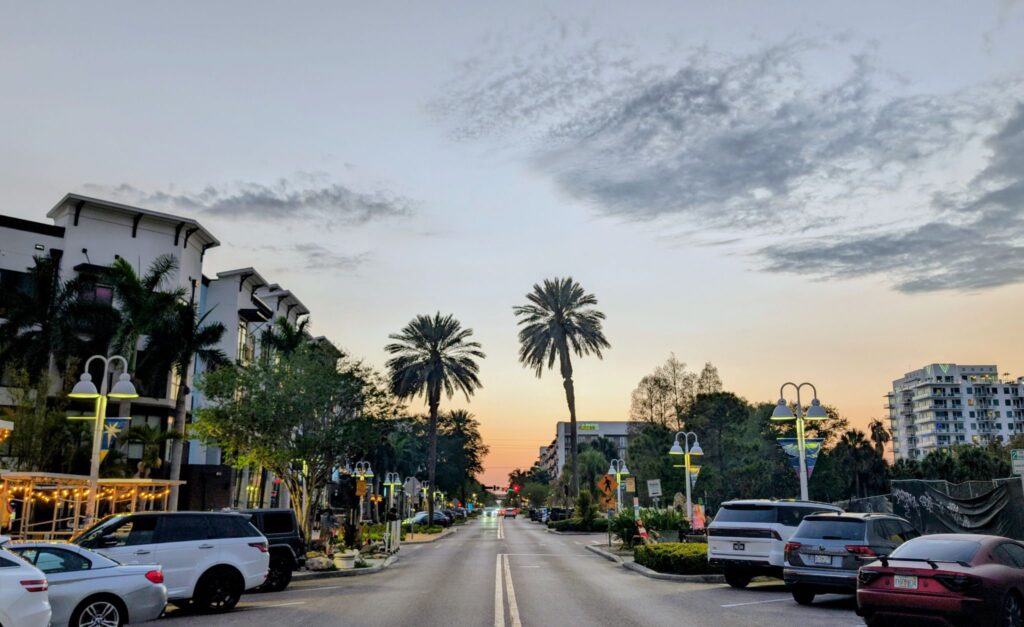
A view of Central Avenue as the EDGE District transitions into the Grand Central District.
Economic Development Officer Gary Jones said a nonprofit must represent a traditional commercial corridor with historic buildings to qualify for a Main Street designation under national guidelines. The Skyway Marina District “does not meet either of those criteria.”
City administrators applied a local designation in 2014 at the behest of former Councilmember Steve Kornell, and Jones believes it “works very well.” Givens questioned what would keep other districts from receiving an exception.
The answer is funding, said Economic Development Manager Andrea Falvey. Two unnamed business districts have already asked to join the Main Streets program.
Councilmember Gina Driscoll expressed “discomfort” over the Skyway Marina District receiving the same, limited Main Street funding as those that meet established requirements. She said the MLK Business District likely already meets Main Street criteria.
The city could provide the district with technical assistance to ensure it meets Main Street requirements but not the associated funding due to budget constraints, Falvey replied. “We need to find a way to be more inclusive,” Driscoll said.
Driscoll noted that she, her colleagues, and administrators all want to bolster the city’s support for Main Streets. The challenge is finding the money, and Gerdes suggested a contingency fund with about $940,000.
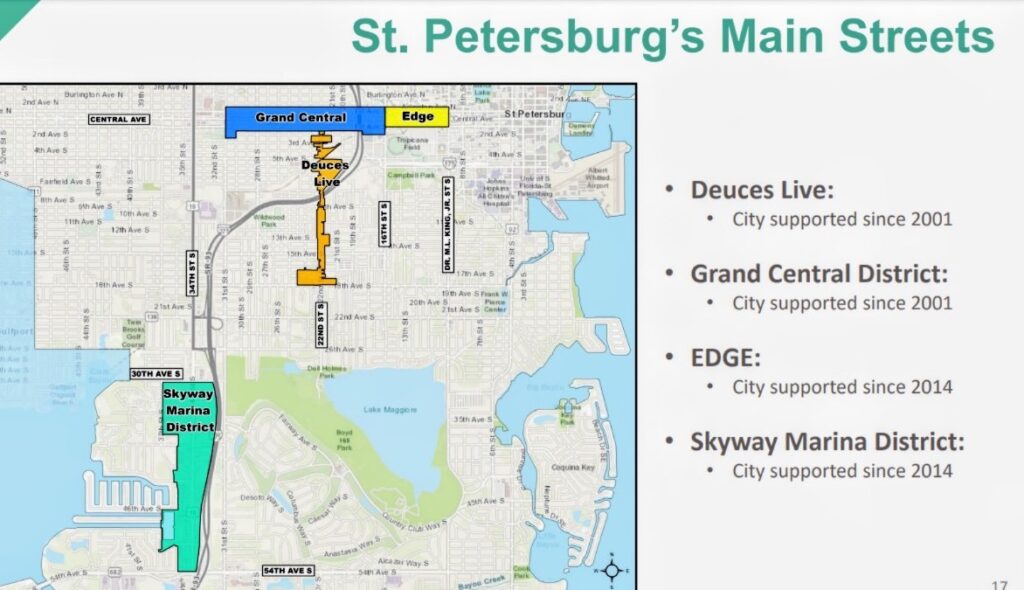
A map of St. Petersburg’s Main Streets. Image: City documents.
Givens prefers to reallocate money, rather than tap any economic development contingency funds. Councilmember Richie Floyd proposed offering additional in-kind contributions, as events account for most of an organization’s revenue.
Councilmember Copley Gerdes is reluctant to reallocate funding before receiving financial information from the governing nonprofits. Fiscal reports are currently optional.
Gerdes explained that 10% of the $2.2 million economic development budget already supports the city’s Main Streets. “We have to be very, very intentional if we are going to go down this path,” he said.
His colleagues on the Economic and Workforce Development Committee agreed. They will discuss the topic further on May 21, after receiving financial documentation.
“We absolutely will have that information for the next meeting,” said City Development Administrator James Corbett. He also highlighted an “opportunity to tap into some of the new development that is happening in some of these districts to privately fundraise, and we could certainly offer technical assistance.”
St. Petersburg launched its community-driven Main Streets program in 2001. The Deuces Live and Grand Central Districts were the first to earn the designation by establishing a governing nonprofit with various volunteer-led committees.
Jones said Main Streets help increase customer traffic and sales, boost local revenues, create a more vibrant business district, and improve the quality of life in surrounding neighborhoods. The program gained popularity nationwide when shopping malls began pulling people away from longstanding commercial corridors and into the suburbs.
Share Your News with Us
To share news with the Power Broker, connect with reachout@powerbrokermagazine.com. To sign up for our twice-weekly e-newsletter, visit www.powerbrokermagazine.com; and to join our online conversation, subscribe to our YouTube channel at Power Broker Media Group – YouTube.