
















Join the Community Assistance & Life Liaisons in building a stronger and safer St. Pete.
Texas family calls for arrest of cop who fatally shot an unarmed Black man during a mental health emergency

The family of a man shot and killed by a Texas police officer during a mental health check is calling for the officer’s arrest. Patrick Warren Sr.’s son said his family had called for help on Sunday because Warren was having a mental health emergency.
Ring doorbell footage shows Killeen Police Officer Reynaldo Contreras knocking on Warren’s door, a surprise to his family who had requested help from a mental health professional. The family said they had called for help the day before, and a mental health professional arrived with no issue.
“They never told us that one wasn’t available. They just sent out a Killeen police officer,” Warren’s son, Patrick Warren Jr., told CBS News correspondent Omar Villafranca.
Warren Jr. said Contreras’s demeanor toward his family was hostile, so they asked him to leave. But moments later, he returned and knocked.
Warren Sr. answered and stepped outside with his hands in the air. His son said he noticed a red dot shining on the door.
Tampa Family Health Centers is Hiring

Tampa Family Health Centers – Full-Time & Part-Time Bilingual Patient Care Specialists
Please Send Resume to TFHCRecruiting@HCNetwork.org
To Apply
or Visit TampaFamilyHC.com to Apply Online
Biden rescinds 1776 commission via executive order
President Joe Biden on Wednesday issued an executive order to dissolve the 1776 commission, a panel stood up by President Donald Trump as a rebuttal to schools applying a more accurate history curriculum around slavery in the US, Biden’s transition team announced Wednesday.
The commission had been formed as an apparent counter to The New York Times’ 1619 Project, a Pulitzer Prize-winning project aimed at teaching American students about slavery that Trump, speaking last fall, had called “toxic propaganda.” The announcement comes just two days after the commission issued an inflammatory report on Martin Luther King Jr. Day and just hours before Biden will take over from Trump, whose time in office was marked by racist statements and actions.
In its report released Monday, the commission asserted that “the Civil Rights Movement was almost immediately turned to programs that ran counter to the lofty ideals of the founders,” specifically criticizing affirmative action policies and arguing that identity politics are “the opposite of King’s hope that his children would ‘live in a nation where they will not be judged by the color of their skin but by the content of their character.’ “
SBA Opened Paycheck Protection Program to Small Lenders on Friday, January 15 and All Lenders on Tuesday, January 19

Lenders with $1 Billion or Less in Assets Will be Able to Submit First and Second Draw PPP Applications on Friday – Continuing Dedicated Access for Community-Based Lenders
Visit https://www.sba.gov/funding-programs/loans/coronavirus-relief-options/paycheck-protection-program/second-draw-ppp-loans for more information.
Stunning ‘Field Of Flags’ Lights Up In National Mall Ahead Of Biden Inauguration

Nearly 200,000 flags are on display, representing the American people unable to attend.
The inauguration of President-elect Joe Biden, which will take place amid a devastating pandemic and war zone-like security levels, will look strikingly different from anything the nation has seen before.
Close to 200,000 flags stand in the National Mall ahead of Wednesday’s event in Washington, D.C. The display is intended to honor the nearly 400,000 people who have died in the U.S. during the COVID-19 pandemic, as well as those unable to attend in person.
Normally, hundreds of thousands of people would flock to the Capitol for Inauguration Day. The festivities will be dramatically pared back to limit the spread of the virus and following the Jan. 6 insurrection on the Capitol by rioters seeking to overturn election results, thousands of National Guard troops guard the capital’s streets and landmarks. The National Mall is closed, and fences have gone up around the Capitol and White House.
The flag display lit up Monday night with 56 pillars of light, symbolizing every U.S. state and territory. The “America United” theme will follow the message Biden campaigned on, calling for unity amidst some of the nation’s most divided times in modern history.
Virtual Hiring Event for Registered Nurses

We have opportunities available for registered nurses at hospitals in Hillsborough, Pasco, Pinellas and Polk counties. To register for our virtual career fair, visit https://bit.ly/36F1ids. You’ll receive an email before the event with details on how to attend.
At BayCare, we’re working to create a different health care model. A model whose foundation rests on recognizing and respecting each patient’s humanity, and on providing access to the highest quality medical care. At the core of this model is our team. Join us!If you’re unable to attend, you can search for jobs at BayCareCareers.org.
Free online conference series

How to Start Your Print-On-Demand Business
A free online conference for both new and experienced store owners Join the 3rd Printful Threads online conference and learn the basics of launching your own print-on-demand business. Tune in to find out what tips and tricks marketing experts and ecommerce experts have up their sleeve when it comes to starting an online business.
Nonprofit Tech Acceleration Package AT NO COST

Give your nonprofit access to donations, discounts, and resources from Microsoft
Microsoft is committed to delivering affordable, innovative cloud solutions to help nonprofits tackle some of the world’s biggest challenges. Through the Nonprofit Tech Acceleration for Black and African American Communities program, the Onboarding Concierge team can match your organization with the technical software and services that will help increase the impact of your mission.
Joe Biden could send a message to Black Americans with this reparations bill
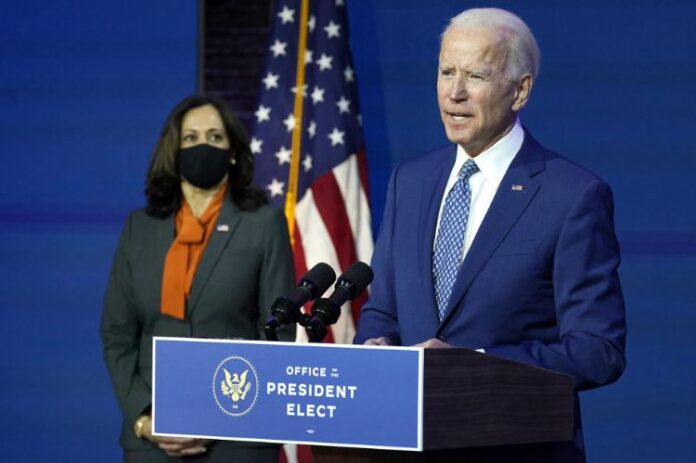
Experts say the H.R. 40 reparations bill could be an early test for President-elect Joe Biden and Vice President-elect Kamala Harris
Published January 8, 2021 by NBCBLK
A bill reintroduced in the House this week to create a commission to examine reparations for the African American descendants of slavery is being seen by many as an early test of President-elect Joe Biden and Vice President-elect Kamala Harris’ proclaimed commitment to tackling structural oppression.
The commission of 13 people would be tasked with examining the history of slavery in the United States and the systemic racism that resulted, including federal and state governments’ role in supporting it, and “recommend appropriate remedies” to Congress. The bill, known as HR 40, was reintroduced Monday by Rep. Sheila Jackson Lee, a Texas Democrat.
“Given the role that Black people played in the election, getting him nominated and saving his campaign — there’s no reason they shouldn’t support this bill,” Mary Frances Berry, a professor of history at the University of Pennsylvania, said of Biden and Harris. “This is one of the best ways to make good on their promise to attack systemic racism and white supremacy and elevate the economic and social condition of Black people.”
Support for the bill has grown steadily since it was introduced in 1989 by then-Rep. John Conyers, D-Mich., when 23 representatives co-sponsored it. Conyers reintroduced it every year until his death in 2019, when Lee first reintroduced it. It now has 173 co-sponsors. Despite such support, the bill has yet to be brought to a full vote.
Lee called the bill “a crucial piece of legislation because it goes beyond exploring the economic implications of slavery and segregation.”
“The call for reparations represents a commitment to entering a constructive dialogue on the role of slavery and racism in shaping present-day conditions in our community and American society,” she said in a statement. “It is a holistic bill in the sense that it seeks to establish a commission to also examine the moral and social implications of slavery.”
Biden has not endorsed the bill by name, but he has supported a study of what form reparations could take. A statement on the Biden-Harris website states that the administration will “address the systemic racism that persists across our institutions today.”
In his victory speech, Biden promised to have Black Americans’ backs. That commitment, however, has long been tainted by his role in the 1994 Crime Bill, which disproportionately affected Black communities, when he was a senator from Delaware. He has called parts of the bill a “mistake” while defending the legislation more broadly. One critic highlighted Biden’s apparent “career-long commitments to austerity and policing as a solution to our social problems,” while he has also faced heat, even from Harris, on his record on school desegregation.
Experts like Berry say getting HR 40 passed presents an opportunity for Biden to repair his legacy on race and for Harris to change her own standing with those who have criticized her record while attorney general in California.
“If they were to do this, it would go a long way toward removing the bad taste some people have in their mouths over having to support them,” Berry said.
“It’s not a heavy lift to support a commission,” Valeria Sinclair-Chapman, a political science professor at Purdue University, said. “Supporting a commission like you’d support a task force — that’s actually one of the easier things to do. It would be a landmark to have this reparations commission.”
Federal consideration of reparations isn’t new. The first effort was introduced in January 1865 with Union Gen. William Tecumseh Sherman’s order to redistribute hundreds of thousands of acres of land to newly freed Black families. Abraham Lincoln’s successor as president, Andrew Johnson, quickly overturned Sherman’s order. It would be more than a century before reparations legislation would be formally introduced to Congress by Conyers.
Congressional leaders have acknowledged the atrocities of slavery over the years, and Congress in 2009 apologized for the impacts of slavery and Jim Crow-era laws on the nation’s Black population. In 2019, the conversation became a topic of debate in 2019 as Democrats battled for the 2020 presidential nomination, and the writer Ta-Nehisi Coates delivered moving testimony at a hearing on reparations by the House Subcommittee on the Constitution, Civil Rights, and Civil Liberties. It was Coates’ 2014 article “The Case for Reparations” in The Atlantic magazine that helped to rekindle the reparations debate.
Talk of reparations isn’t only happening at the national level. Some city and state leaders have offered reparations through funding Black business ownership to increasing access to housing. Critics say that, although these efforts may appear beneficial, wealth distribution would be more helpful than simply making inequitable systems more accessible to Black people. In 2015, organizers in Chicago fought successfully for an ordinance that would provide reparations to dozens of people tortured under a Chicago police commander, Jon Burge, in the 1970s to the ’90s.
Reparations have gone in and out of headlines in recent years, and the summer’s protests following the deaths of George Floyd and Breonna Taylor have only thrust the topic into the spotlight again. How Biden and Harris engage the conversation, and HR 40 specifically, could foreshadow what Black people can expect from the administration in the coming years.
“HR 40 is symbolic work,” Chapman of Purdue University said. “It’s symbolic and substantive. There’s something about a bill like this that helps people to organize across the country. It brings an issue from the sidelines to the mainstream, and that’s the important work of legislators like John Conyers and Rep. Lee.
“Should it be the measure of commitment among Black people? I think it should be among many. Supporting HR 40 would be easy. There are other substantive proposals that need to be addressed, too.”
Rep. Al Green reacts to praise for early call to impeach Trump in 2019

Published January 13, 2021 by the grio
On the House floor on Wednesday as the U.S. House of Representatives debated on the vote to impeach President Donald John Trump for a second time, there was a special recognition of Texas Congressman Al Green for his early attempts to impeach Trump long before this consequential moment in history.
Maryland Congressman Steny Hoyer acknowledged Rep. Green on Wednesday during a debate on the rules of the article on impeachment. His comments came before a rule vote that preceded the debate on impeachment.
Green in July 2019 introduced articles of impeachment that were ultimately tabled. At the time, Green wanted to impeach President Trump due to his racist tweets, his targeting of four Democratic congresswomen of color, and his infamous 2017 comments calling neo-Nazis “very fine people” following the deadly “Unite the Right” rally in Charlottesville, Virginia.

Today, Jan. 13, 2020, members of the U.S. House are crediting Green for his foresight. An emotional Green says he is thankful for the acknowledgment.
“I want to first say that I should have thanked Mr. Hoyer. He did not have to come to the floor with that message, and I think that what he did was to allow for the people who were there at the genesis of this to be noted,” Green exclusively told theGrio.
Some of those at the very beginning who supported the impeachment effort were lawmakers like California Congresswoman Maxine Waters and Tennessee Congressman Steve Cohen.

The 2019 impeachment effort led by Green concluded that Trump was “unfit for office.” Only 95 members of the House of Representatives signed onto Green’s resolution.
“That was when we reached critical mass,” Green said. “I was very much concerned about the president’s behavior and his invidious discrimination. The second one had to do with the president’s putting his bigotry into policy. All of these were really about one thing, and that was the way the president weaponized his hate and he does it very efficiently and effectively.“
Congressman Green has paid a price for speaking up and calling for the impeachment of President Trump. Death threats and other incidents — including being screamed at by Trump supporters at an airport — following his introduction of the resolution have at times required him to have additional law enforcement protection when in public places.
Green is in full support of the effort to impeach Trump for a historic second time, calling it very ”sad.” The congressman was on the Hill Jan. 6 and decided not to go to an undisclosed area of safety with his other congressional leaders. He instead chose to stay with his staff in their office that was not touched by the domestic terrorists and insurrectionists.
Subscribe to our newsletter!
Ladee Hubbard’s ‘The Rib King’ looks beyond the labels
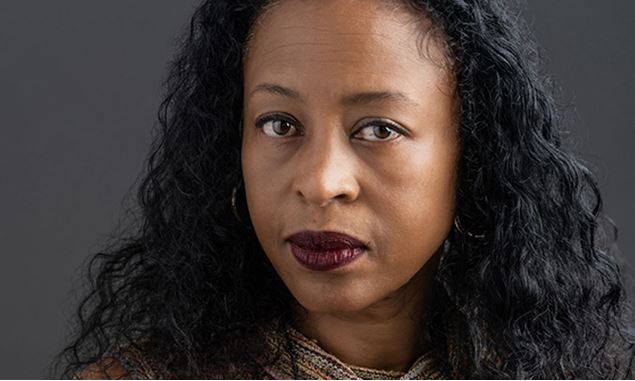
A compelling novel tells the story of how a Black man’s face came to be on a barbecue sauce can, and what happened afterward
Published January 8, 2021 by Tampabay.com
Until recently — so recently it’s shameful to think about it — the smiling faces of Black servants like Uncle Ben and Aunt Jemima were a long-accepted way to market food and other domestic products. Few consumers wondered what the stories behind those faces might be.
In her terrific new novel, The Rib King, Ladee Hubbard looks beyond the label to tell one of those stories, and it’s moving, surprising, compelling and strange.
Hubbard, who lives in New Orleans, spent part of her childhood in Florida. The Rib King is a prequel to her impressive 2017 debut novel, The Talented Ribkins. That book, set in the near present, told the engrossing story of a Black family scattered across Florida who each had an unusual superpower. They shared a mysterious common ancestor, a man known as the Rib King — their surname is a blurred version of that title — who became famous decades ago for a popular barbecue sauce.
The Rib King explains why that family name became disguised, and a whole lot more.
Its story is set early in the 20th century, in an unnamed Northern city that sounds something like Chicago. Its first half focuses on Mr. Sitwell, the groundskeeper for a wealthy family, the Barclays. Like the rest of the couple’s household staff, Sitwell is Black, having come to the house as a young boy thanks to a peculiar custom of Mrs. Barclay’s. Each year, she takes in three young teenage boys from a Black orphanage. Working with the Barclays’ staff trains them in skills they can use to get jobs as adults. Mrs. Barclay thinks of it as an act of charity; some of the staff see it as a source of cheap labor.
Sitwell is the only one of those boys who stayed beyond the allotted year; now in his mid-30s, he’s a reliable teammate to Mamie, the no-nonsense cook who runs the house, and to the chauffeur, Whitmore, and a pretty young housemaid named Jennie Williams. Sitwell is a mentor to the current trio of orphans, Bart, Mac and Frederick, who look enough alike to be brothers and are as closely bonded as family. They’re a bit distractible but cheerful and energetic, and Sitwell is proud of their progress. “He’d soon realized that the easiest way to distinguish between them was to look for their scars,” Hubbard writes: One has a facial scar, one lost part of an ear to a watchdog, and one is missing the toes on one foot, chopped off, he tells Sitwell, to keep him from running away.
Then Sitwell finds them excitedly reading a book called The Life and Times of Cherokee Red, Wild Man of the Reconstruction. It’s a cheesy dime novel that sounds like a Western shoot-’em-up about a small town being burned down. The boys explain that a recent dinner guest of the Barclays handed out copies of the book, and this one was left behind. They didn’t steal it, they assure him, knowing theft by servants is a firing offense.
Sitwell believes them, but the book itself disturbs him. Its violent story takes place not in the West but in Florida, a place Sitwell left when he was 9 years old. It reminds him “that his real home would always be a small village in the swamps of Florida that twenty-five years before he’d been forced to stand and watch as it burned to the ground.” The only survivor of that lethal attack, he’s never told anyone about it.
The book’s character names and the outline of its plot tell Sitwell that it’s based on the real massacre he survived, but the story has been distorted for racist reasons — to make white people the heroes when he knows they were the killers. He realizes that the dinner guests who gave the Barclays the book, a pair of Florida businessmen with whom Barclay is in negotiations over an important deal, have a buried connection to his own past.
In the early part of the book, Hubbard paints Sitwell as an admirable character: calm, resourceful, generous with his help, a man of integrity. But the boys’ book has a powerful effect on him. Then Mr. Barclay, whose financial situation is dire, makes a deal to sell a meat sauce recipe concocted by Sitwell and Mamie to another businessman. Sitwell’s image, or a cartoonish version of it — the Rib King — will be on the label, but Barclay and the other white man will make the money.
Hubbard takes the reader right up to the brink of the disaster that results, and then jumps the second half of the book to 10 years later. Now its focus is Jennie Williams, no longer a housemaid. She’s a businesswoman and entrepreneur, the owner of a small beauty salon. Some of Jennie’s past comes to light: She, too, was born into poverty in the South. Married at 11, a mother at 12, Jennie ran away North with her little daughter, Cutie Pie. She’s proud to have raised the girl on her own, and now Cutie is about to graduate from nursing school.
Jennie is hard at work on a deal to market a salve she and Mamie developed, which functions both as a skin cream and a cure for a certain condition ladies of that era don’t talk about (yeast infection). If she can find a backer, most likely a white one, she can be rich.
Jennie hasn’t seen or heard from Sitwell for a decade, but now she sees street banners with the Rib King’s grinning, crowned visage, announcing his publicity appearance in the city. Just as suddenly as that dime novel upended his life, his return will blow up hers.
The book’s second half becomes a surreally tinged mystery as Jennie’s quest for financial backing becomes increasingly tied to her realization that her memory of what happened at the Barclay house is not the entire story. What Sitwell did then, she discovers, might still be going on, and every time she thinks she’s found an answer, another version surfaces.
Hubbard weaves large issues into The Rib King: racism in all its manifestations, from the tedious everyday indignities its characters endure to staggering economic inequality and unpunished violence. The Great Migration, the early years of the civil rights movement and the rise of the Black middle class all provide background for the story. Hubbard’s measured, elegant style is a grounding contrast to it all, and she crafts a complex, suspenseful plot with skill.
But, most of all, The Rib King is about its characters, complex, engaging, determined to rise.